Introduction: The $2,000 Morning Habit
Let’s have an honest conversation about your morning routine. You wake up. You groggily head to your kitchen. Maybe you stare at a pod machine that produces a lukewarm, watery cup of “coffee” that tastes vaguely of plastic. Or maybe, you get in your car, drive to the local coffee shop, wait in line for 15 minutes, and shout your order over the noise of blenders.
You tap your card. $6.75. Add a dollar tip. $7.75.
It doesn’t feel like a life-changing amount in the moment. But let’s do the “Latte Math”:
- $7.75 per day x 5 days a week = $38.75/week.
- $38.75 x 52 weeks = $2,015 per year.
And that is just for one person. If you and your partner both have a coffee habit, you are bleeding over $4,000 a year on bean water and steamed milk.
For that price, you could fly first class to Italy. Or, you could invest in a machine that creates a better cappuccino than the teenager at the drive-thru, right in your pajamas.
Breville has democratized the art of espresso. They took the massive, $20,000 commercial machines found in high-end cafes and shrank the technology to fit on your countertop. They didn’t cut corners on the science; they just cut the footprint.
In this deep dive, we are going to explore the Breville Espresso Ecosystem. We will break down the science of extraction, compare the top models, and show you exactly how to turn your kitchen into the best cafe in the neighborhood.
👉 Ready to fire your barista? Click here to shop Breville’s Espresso Lineup with exclusive offers!
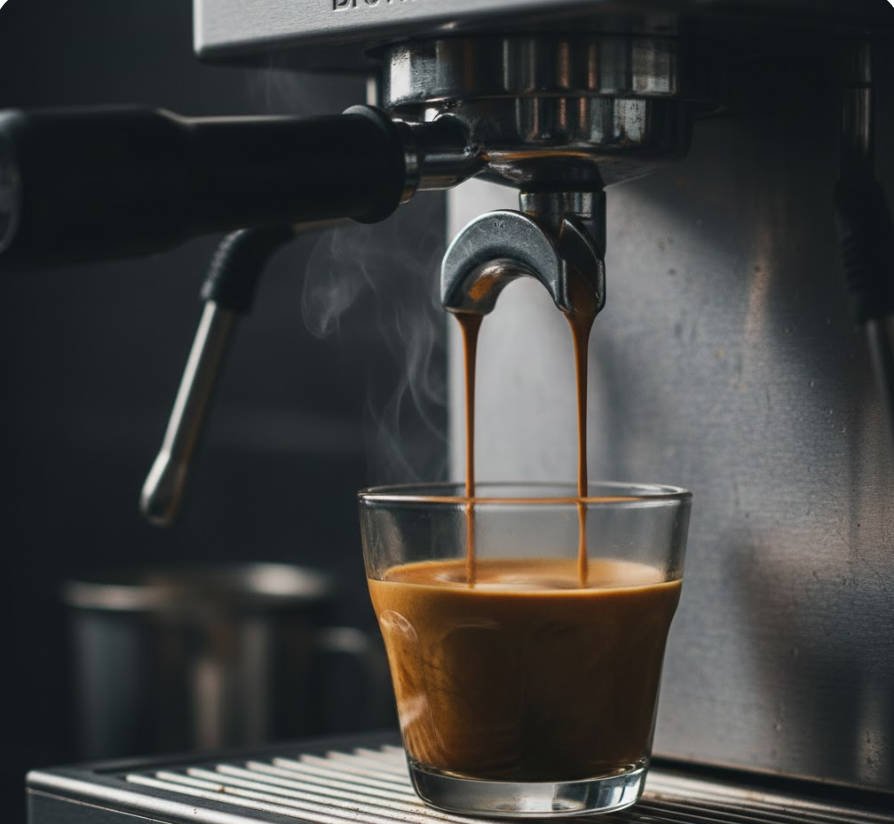
Part 1: The Science of “Third Wave” Coffee (Why Keurig Doesn’t Cut It)
To understand why you need a Breville, you have to understand why your current coffee maker is failing you. Standard drip machines or pod machines prioritize convenience over chemistry. They use stale, pre-ground coffee and water that is often too hot (burning the beans) or too cold (sour flavor).
Breville machines are engineered around the “4 Keys Formula” of Third Wave Specialty Coffee. This isn’t marketing fluff; it is pure physics.
1. Rich, Full Flavor (The Dose)
To get that rich, syrupy body, you need 19-22 grams of ground coffee. Pods typically only hold 5-7 grams. Breville uses commercial-style 54mm and 58mm stainless steel portafilters that hold the full, professional dose.
2. Perfectly Balanced Taste (PID Temperature)
Coffee is volatile.
- If water is 205°F, it burns the oils (Bitter).
- If water is 190°F, it under-extracts (Sour/Acidic). Breville uses PID Digital Temperature Control to keep the water at exactly 200°F (93°C). This precision detects and corrects temperature fluctuations during the extraction.
3. Irresistible Body (9-Bar Pressure)
You need pressure to emulsify the oils in the bean to create “crema” (that golden foam on top). But slamming the puck with high pressure instantly causes channeling. Breville uses Low-Pressure Pre-Infusion to gently soak the coffee puck, expanding it before hitting it with the full 9 bars of extraction pressure.
4. Silky Mouthfeel (Micro-Foam Steam)
To get that velvety texture in a latte, you need steam that is hot enough and powerful enough to create thousands of “micro-bubbles.” Breville steam wands generate high pressure (266°F) to turn milk into “liquid paint,” essential for pouring latte art.
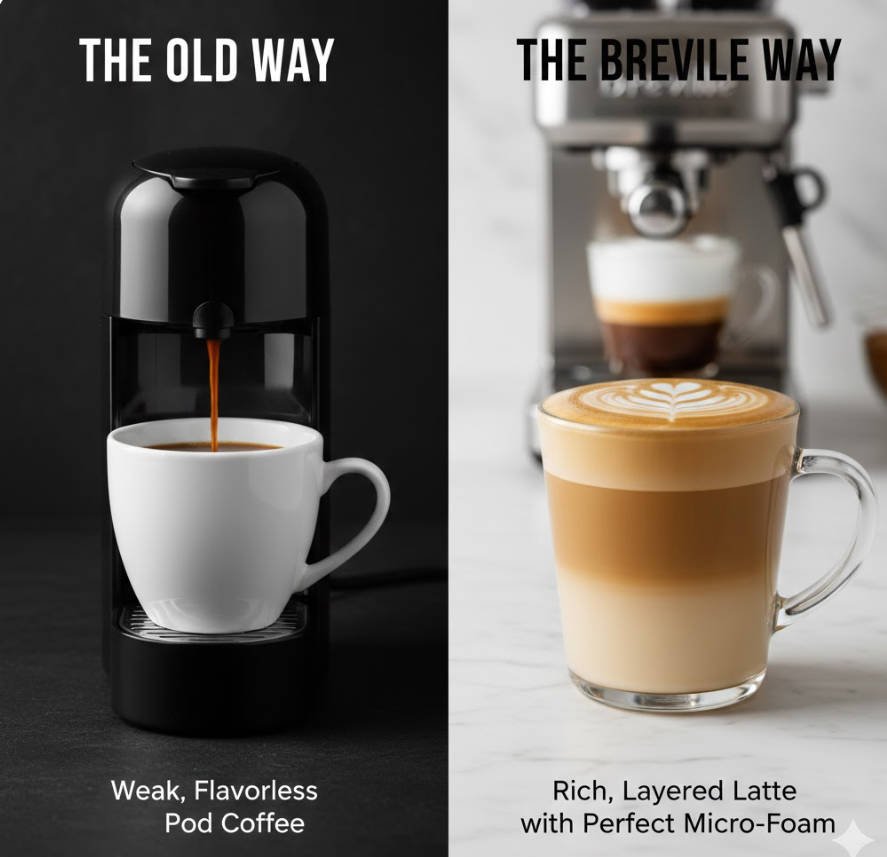
Part 2: Choosing Your Weapon (The Machine Hierarchy)
Breville offers a machine for every level of enthusiasm. The key question is: Do you want a hobby, or do you want a robot?
1. The Purist’s Choice: The Barista Express®
This is the machine that started the home revolution. It is the Toyota Tacoma of espresso machines: rugged, reliable, and manual.
- The Workflow: You weigh your beans. You grind them into the portafilter. You tamp (press) the grounds down yourself. You lock it in, pull the shot, and steam the milk manually.
- Why Buy It: It forces you to learn the skill. There is a deep, tactile satisfaction in dialing in your grind size and pulling a shot that looks like melted chocolate.
- Best For: The hobbyist who wants to learn the craft.
2. The Smart Assistant: The Barista Touch™ Impress
Tamping is the hardest part of espresso. If you press too hard, the water can’t get through. If you press too light, the water rushes through (sour).
- The Impress™ Puck System: This machine fixes human error. You grind the beans, and then you pull a lever on the side. It mechanically tamps the coffee with exactly 22lbs of pressure and gives it a 7-degree polish.
- Auto MilQ™: It features an automatic steam wand with settings for Oat, Almond, Soy, and Dairy. You just place the jug under the wand, and it textures the milk to perfection automatically.
- Best For: The person who wants great coffee without the mess of loose grounds.
3. The Ultimate Luxury: The Oracle® Jet
The new king of the lineup.
- Dual Boilers: Most home machines have one heater. You have to pull your shot, wait for the machine to heat up, and then steam your milk. The Oracle has separate boilers for coffee and steam. You can brew and steam at the same time.
- Automation: It grinds, doses, and tamps automatically. You just move the handle from the grinder to the brew head.
- ThermoJet® Speed: It heats up in seconds and uses less energy than older models.
- Best For: The uncompromising buyer who wants commercial speed and quality.
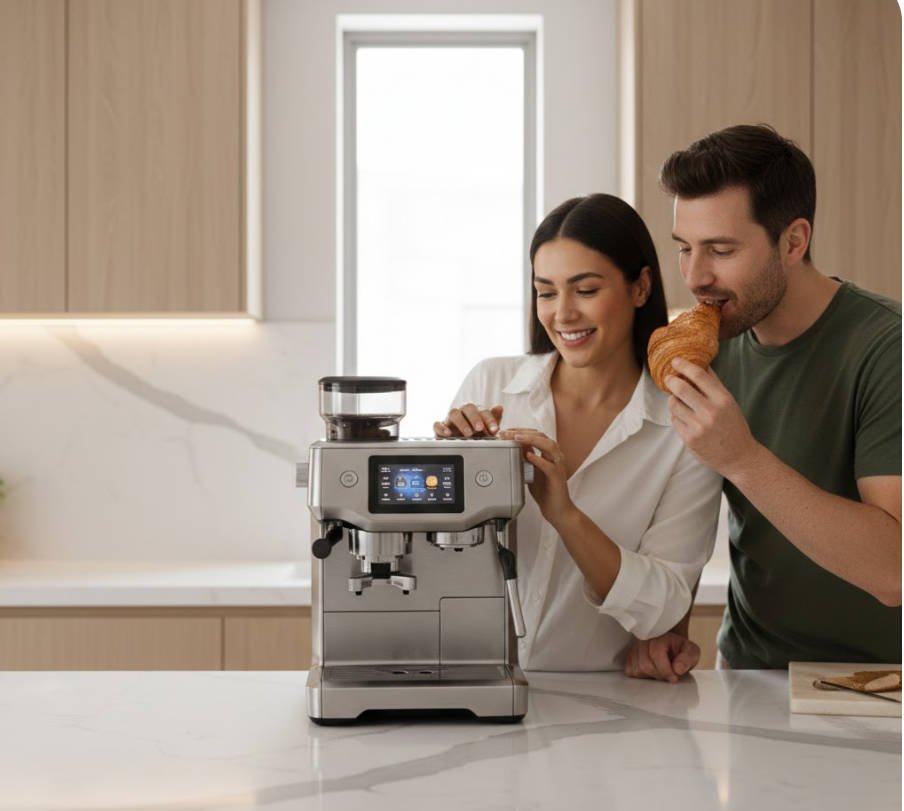
Part 3: The Secret Ingredient (The Grinder)
Here is a secret most people don’t know: The grinder is more important than the machine.
If your coffee grounds are inconsistent (some big chunks, some dust), the water will flow unevenly. This is why cheap “blade grinders” ruin coffee.
Breville’s integrated grinders (found in the Barista and Oracle series) use Stainless Steel Conical Burrs. They crush the beans to a precise, uniform size.
- Adjustability: You can tweak the grind size via a dial. If your shot is running too fast (watery), you make the grind finer. If it’s too slow (dripping), you make it coarser. This control is the key to unlocking flavor notes like “blueberry,” “chocolate,” or “jasmine” hidden in your beans.
Pro Tip: If you buy a machine without a grinder (like the Bambino Plus), you must pair it with the Breville Smart Grinder™ Pro. Do not use pre-ground coffee!
Part 4: The Economics of Home Espresso (ROI Analysis)
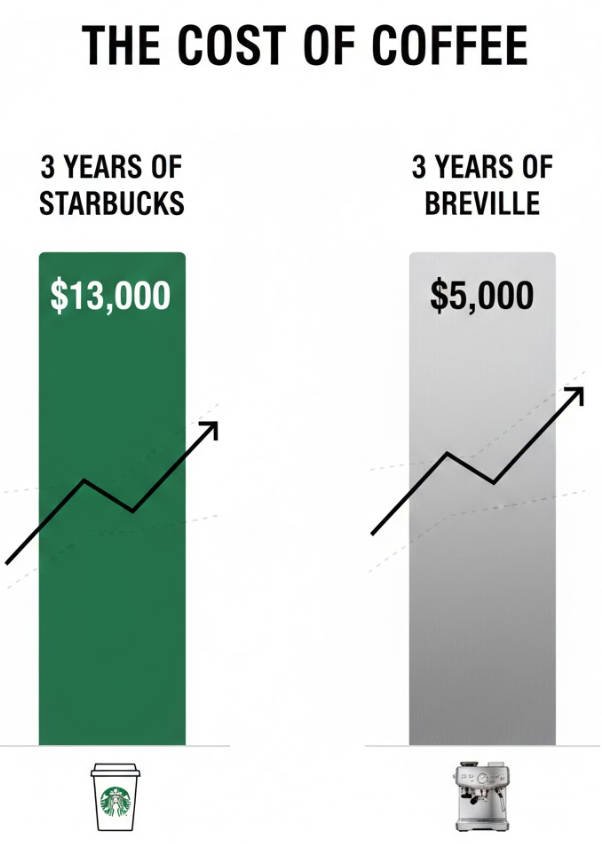
Is spending $800 – $2,500 on a coffee machine crazy? Let’s look at the financial breakdown over 3 years.
The Cafe Scenario:
- Daily Latte habit for a couple: $12/day.
- Yearly Cost: $4,380.
- 3-Year Cost: $13,140.
The Breville Scenario (Oracle Jet):
- Upfront Machine Cost: ~$2,000.
- Premium Beans (3 years): ~$2,500.
- Milk/Oat Milk (3 years): ~$600.
- Maintenance/Filters: ~$150.
- 3-Year Total: $5,250.
The Result: Even with the most expensive machine and premium beans, you save nearly $8,000 over three years compared to buying daily coffees. The machine pays for itself in the first 6-8 months.
Part 5: Accessories to Complete Your Bar
To truly live the barista lifestyle, you need a few accessories. Breville thinks of everything.
- The Knock Box: Where do you put the hot, wet puck of coffee grounds after you brew? You need a “Knock Box.” It’s a small stainless steel bin with a rubber bar. You bang the portafilter against it to eject the puck. It’s oddly satisfying.
- The Puck Sucker: Yes, that’s the real name. For the Oracle series, Breville released a device that uses a vacuum to suck the puck out of the portafilter silently. No banging required.
- Dosing Funnel: A magnetic ring that sits on your portafilter to prevent grounds from spilling onto your counter while grinding.
- Bottomless Portafilter: (Sold separately) This chops off the bottom spouts of the handle, allowing you to watch the extraction. It is the ultimate tool for diagnosing your shot quality (and taking cool Instagram videos).
Part 6: Maintenance (Don’t Neglect It!)
A Breville is a high-performance engine. Like a Ferrari, it needs maintenance.
- Water Filters: 98% of coffee is water. If your water has high mineral content, scale will build up and kill the machine. Breville machines come with resin water filters in the tank. Change them every 3 months.
- Backflushing: Every 200 shots, the machine will light up a “Clean Me” light. You insert a cleaning disc and a tablet into the portafilter and run a cycle. This removes coffee oils from the internal shower screen.
- Steam Wand: Always “purge” (blast steam) before and after texturing milk, and wipe the wand immediately with a damp cloth. Milk dries like cement if you leave it!
Conclusion: Wake Up to Better
There is a specific moment that happens to every Breville owner. It’s about two weeks after buying the machine. You take a sip of the latte you just made—the foam is silky, the temperature is perfect, and the flavor is rich and chocolatey.
Then, you visit your old coffee shop. You take a sip of their coffee, and you realize… yours is better.
That is the moment you become a Home Barista.
Breville gives you the power to start your day with excellence. It turns a caffeine addiction into a culinary art form. Stop burning your money on mediocre coffee. Build your sanctuary.
Ready to pull the perfect shot?
👉 Click here to shop the full Breville Espresso Collection and start your home barista journey today!
(Note: Breville offers free shipping on all espresso machines, plus a 2-year warranty on premium models.)
FAQ: Home Barista Questions
Q: Can I use regular store-bought beans? A: You can, but you shouldn’t. Most supermarket beans were roasted months ago. For the “God Shot” (lots of crema), you need fresh roasted beans (roasted within the last 2-4 weeks). Check the “Roasted On” date on the bag.
Q: Is it hard to learn latte art? A: It takes practice. The key is “micro-foam”—milk that looks like wet paint. Breville’s steam wands are powerful enough to create this. The Barista Touch and Oracle series do it automatically, making art much easier for beginners.
Q: Does Breville make a cold brew machine? A: Yes! While their espresso machines can make an “Iced Latte,” if you want true Cold Brew, check out the Breville Precision Brewer®. It has a dedicated “Cold Brew” setting that steeps the coffee over a long period.
Q: What is the difference between the Bambino and the Bambino Plus? A: The Bambino Plus has the automatic milk frothing sensor (Auto MilQ) and a larger water tank. The standard Bambino requires you to steam the milk manually and is slightly cheaper. For beginners, the Plus is worth the upgrade for the milk tech alone.